Major Japanese styles
Shito-Ryu, Shotokan, Goju-Ryu and Wado-Ryu. In 1964, Shito-kai was one of the founding styles of Japan's national federation.
 ZanchinKarate-Do
Shito-Ryu history · 1889 – today
Shito-Ryu was born when Kenwa Mabuni, a master from Shuri, joined Okinawa's two great schools of karate into one. This is the story of the style we teach at Zanchin.
See the timelineShito-Ryu (糸東流) is one of the four major styles of Japanese karate. It was founded by Kenwa Mabuni (1889–1952), who trained under Anko Itosu (Shuri-te) and Kanryo Higaonna (Naha-te) in Okinawa, moved to Osaka in 1929 and named his style after the first kanji of each teacher in the early 1930s. It is known for having more than 60 kata.
Mabuni took the first character of each teacher's name: 糸 from Itosu and 東 from Higaonna. Together they read Shi-tō. His style honors both.
In the old Ryukyu Kingdom, Okinawa's native fighting art (te) blends with Chinese martial arts. Two great schools grow up, named for their towns: Shuri-te and Naha-te.
In Naha. As a young man he trains in Fuzhou, China, and returns as the leading master of Naha-te: breathing, tension and close-range power.
On 14 November in Shuri, Okinawa, into a family descended from the warrior Uni Ufugusuku.
Anko Itosu, master of Shuri-te, brings karate into Shuri's elementary school. To teach children he creates the Pinan kata we still practice today.
He begins training under Itosu. Years later, introduced by Chojun Miyagi, he also trains under Higaonna. He learns from other masters too, including Seisho Aragaki and Go Kenki.
After military service he joins the Naha police, serving about ten years and teaching karate to fellow officers.
Mabuni moves to Osaka to teach full-time. He first calls his style Hanko-ryu, "the half-hard style."
In the early 1930s he adopts the name Shito-Ryu (sources give dates from 1931 to 1934). In 1934 he opens his Yoshukan dojo in Osaka.
Shito-Ryu is registered with the Dai Nippon Butoku Kai, the body that governed Japan's martial arts, and Mabuni receives the title of Renshi.
Kenwa Mabuni dies on 23 May in Tokyo, aged 62. His sons Kenei and Kenzo, and students like Manzo Iwata, carry his work forward.
All-Japan Shito-kai is unified, and Shito-Ryu becomes one of the four major styles that found Japan's national karate federation.
The World Shitoryu Karatedo Federation is founded and holds its first World Championships.
Karate debuts at the Tokyo 2020 Games (held in 2021) with kata and kumite events. Shito-Ryu kata are on the World Karate Federation's official list.
In Bay 9 on 84th Street, Kyoshi Luis Sanchez (7th Dan) and the Sosa family teach Shito-Ryu to kids, teens and adults, in English and Spanish.
Book a class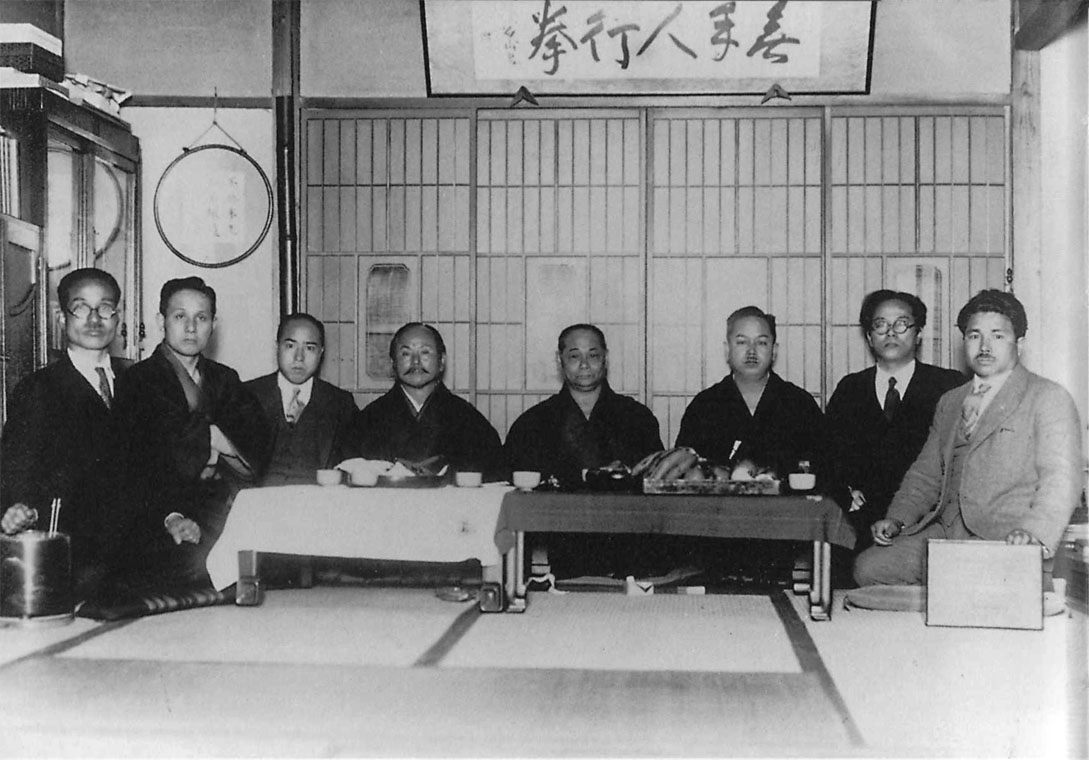
Archive · Tokyo, 1930s
In the 1920s and 30s, Okinawan masters traveled to Tokyo and Osaka to teach. Mabuni made several trips to Tokyo to demonstrate karate, then settled in Osaka, where he taught at universities and to the police.
Photo: "Masters of Karate," public domain, via Wikimedia Commons.
From 19th-century Okinawa to our mats in Hialeah. Knowledge travels the old way: teacher to student.
Other well-known Shito-Ryu branches include Shukokai, Seishinkai, Itosu-ryu, Shobukan, Kenshukai and Kotaka-ha.
Shito-Ryu has one of the largest kata curricula in karate, because Mabuni preserved the forms of both his teachers and added his own. These are some of the core ones.
Shuri-te · quick, direct, linear
Naha-te · circular, breath, power
From Aragaki, other masters and the founder
Names and versions vary slightly between branches. At Zanchin, each belt has its own kata — your sensei will tell you which ones are yours.
A century-old art, alive in dojos, tournaments and the Olympic Games.
Shito-Ryu, Shotokan, Goju-Ryu and Wado-Ryu. In 1964, Shito-kai was one of the founding styles of Japan's national federation.
Karate entered the Tokyo 2020 Games with kata and kumite. Shito-Ryu kata such as Matsukaze, Papuren, Unshu and Suparinpei are on the WKF's official list.
Instructors such as Fumio Demura in California and Chuzo Kotaka in Hawaii helped root Shito-Ryu in the United States.
The short answers parents look for.
Kenwa Mabuni (1889–1952), a master from Shuri, Okinawa, who trained under Anko Itosu and Kanryo Higaonna. He moved to Osaka in 1929 and named his style Shito-Ryu in the early 1930s.
糸東流 joins the first kanji of his two teachers: 糸 (shi) from Itosu and 東 (to) from Higaonna. Ryu means school or style.
More than 60, from the Itosu and Higaonna lines, other masters and Mabuni himself. It's one of the most complete curricula in karate.
Yes. It mixes Shuri-te's quick technique with Naha-te's control and breathing. Itosu's Pinan kata were created specifically to teach children in school.
Karate debuted at Tokyo 2020 (in 2021) with kata and kumite. Shito-Ryu kata are part of the World Karate Federation's official list.
Some dates differ between sources (for example, the year the name Shito-Ryu was adopted, 1931–1934). Where they disagree, we give the range.
Join the lineage
Train the same style Mabuni taught in Osaka, led by a 7th Dan, minutes from home.
